SlickPic
Live webinar · · Reserve my seat
A free, live hour for photographers ·

You've done the work.

Your best photographs are in the wrong place — and it's costing you.

The opportunities you'll never know you missed.

In one hour, see why it happens — and what finally changes it.

2026-07-09 09:00 AM

For sixteen years, we've built portfolio websites for serious photographers. The ones who teach, too.

KL
"I haven't met many bad photographers. I've watched plenty of good photographs go nowhere."
Kevin La Rue Your host · SlickPic — sixteen years of looking
The longest thread

Your photographs reach back further than almost anything in your life.

If you have been carrying a camera for any length of time, you know what we mean. A first camera bought for a college course. A Pentax taken on a honeymoon. A Peace Corps post. A darkroom in a med-school basement. Slide film. Workshops with people no longer here.

The photographs are the part you've already made. The place they live is the part most photographers never finished — and it's the only part you can't make alone in a weekend.

A short detour, into a metro station

In 2007, Joshua Bell took his $3.5 million Stradivarius into a Washington Metro station and played the most complex Bach piece ever written. He played for an hour. Seven people stopped. He made $32. That same week, the same man, the same violin, sold out concert halls at $100 a seat.

He wasn't a different musician. He was in a different place.

You are Joshua Bell. You've done the playing. The only thing missing is the room.

The premise

There are serious photographers everywherewho have already done the hard part.

It isn't a talent problem. We've spent sixteen years looking at serious photographers' work, and the talent is almost always already there. What's missing is the place the work is being seen.

A photograph on a wall stops you. In a magazine, it gets a moment of your time. In a feed, it gets scrolled past — between someone's dinner and a friend's dog. The image doesn't change. The place does.

And when the place finally fits the work, the next time somebody asks where to see your photographs, the answer gets simpler. You point to the place. The place does the rest of the work.

That's what this hour is about.

The work is already done

Come see where it finally lives.

Reserve My Free Seat
I
The Diagnosis

What's quietly working against your work.

If you are anything like the photographers we sit with most often, you have already sensed it. Three different sites started and stepped away from. Two relaunches. A handful of social accounts. And one quiet promise every January that this is the year.

By the end of the hour, you will have the words for what has actually been working against the work — and what to do about it.

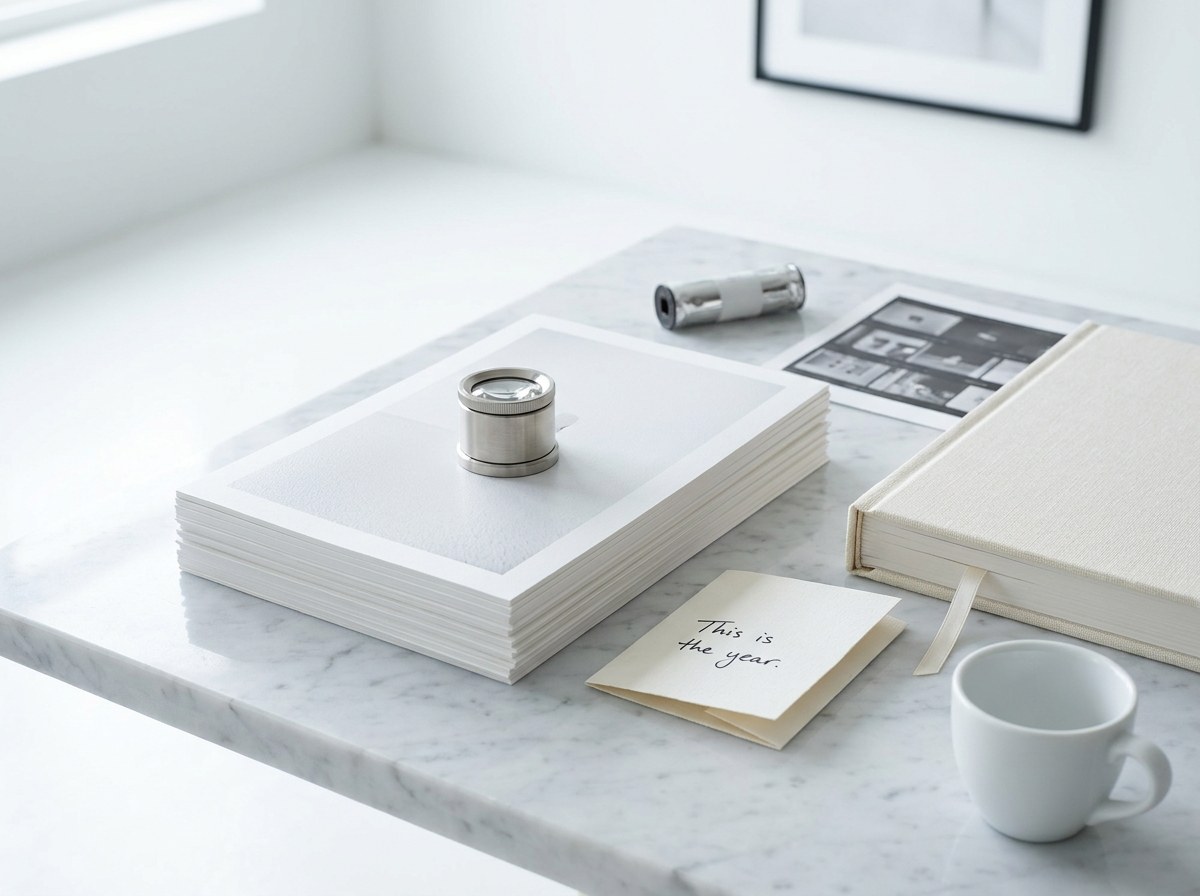
A Carrara marble surface in bright cool daylight — a neat stack of photographic prints all placed face-down, a brushed-nickel loupe resting on top, a cream-linen photobook, a contact sheet, a film canister, and a cream Post-It with 'This is the year.' handwritten in dark ink.
Act One · The Diagnosis. What's quietly working against the work, finally named.
II
The Distinction

Why photographs need to be treated differently.

Art has been treated differently for centuries — and there's a reason. Walk into any serious gallery in the world. White walls. Art at eye level. Lots of separation between pieces. The same design everywhere. That's not by accident — it's how the eye actually sees art.

Your photographs deserve the same room — on a wall or on a website.

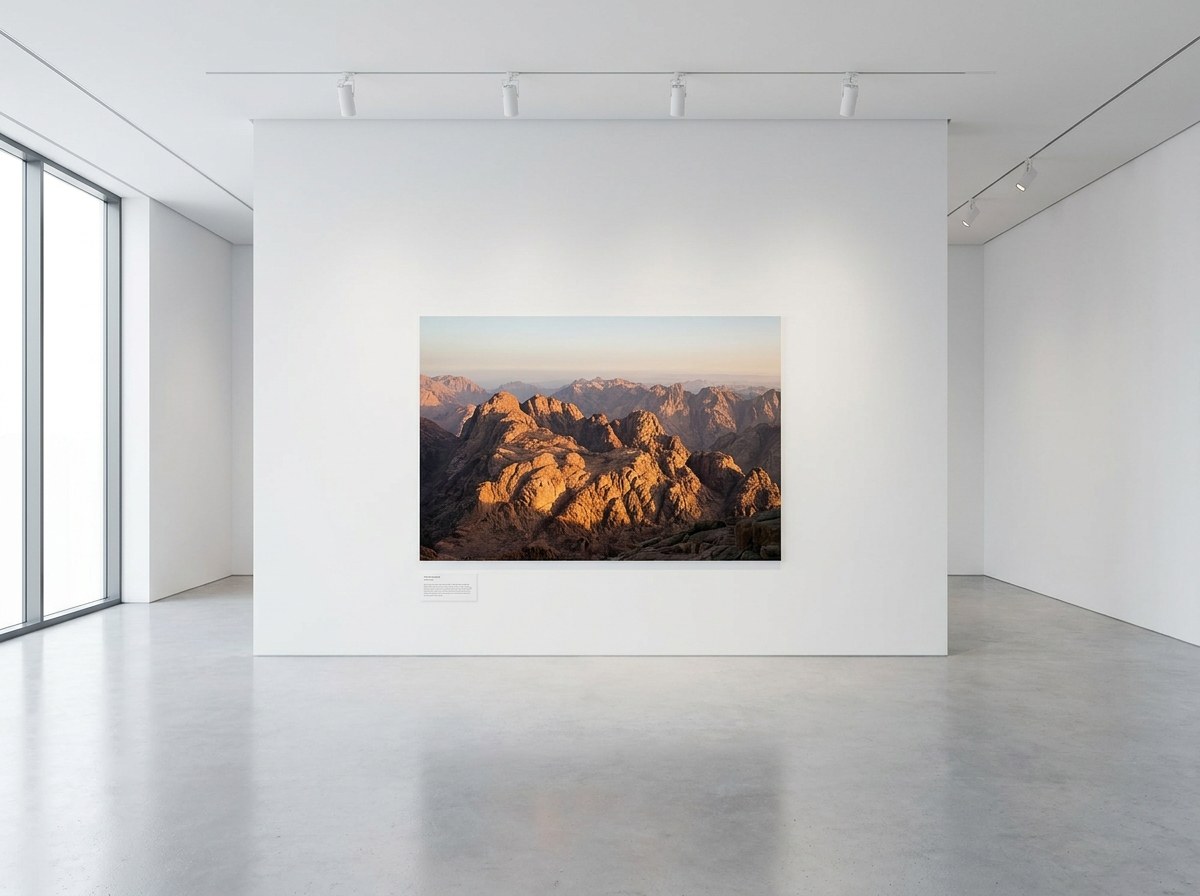
A SFMOMA-style museum gallery interior — pure white walls, pale oak plank floor, museum spotlight bar above, one large matted misty seascape print in a thin black gallery frame, a cream-cushioned modern bench in the foreground.
Act Two · The Distinction. A gallery's same logic, applied to a website.
III
The Place

What changes when the work is finally presented properly.

When somebody asks about the photographs, the conversation gets simpler. You point to the place. The place does the rest of the work.

The photographs stop living on a hard drive and start being something people respond to — including the people whose response matters most to you.

The work was already there. The place is what was missing.

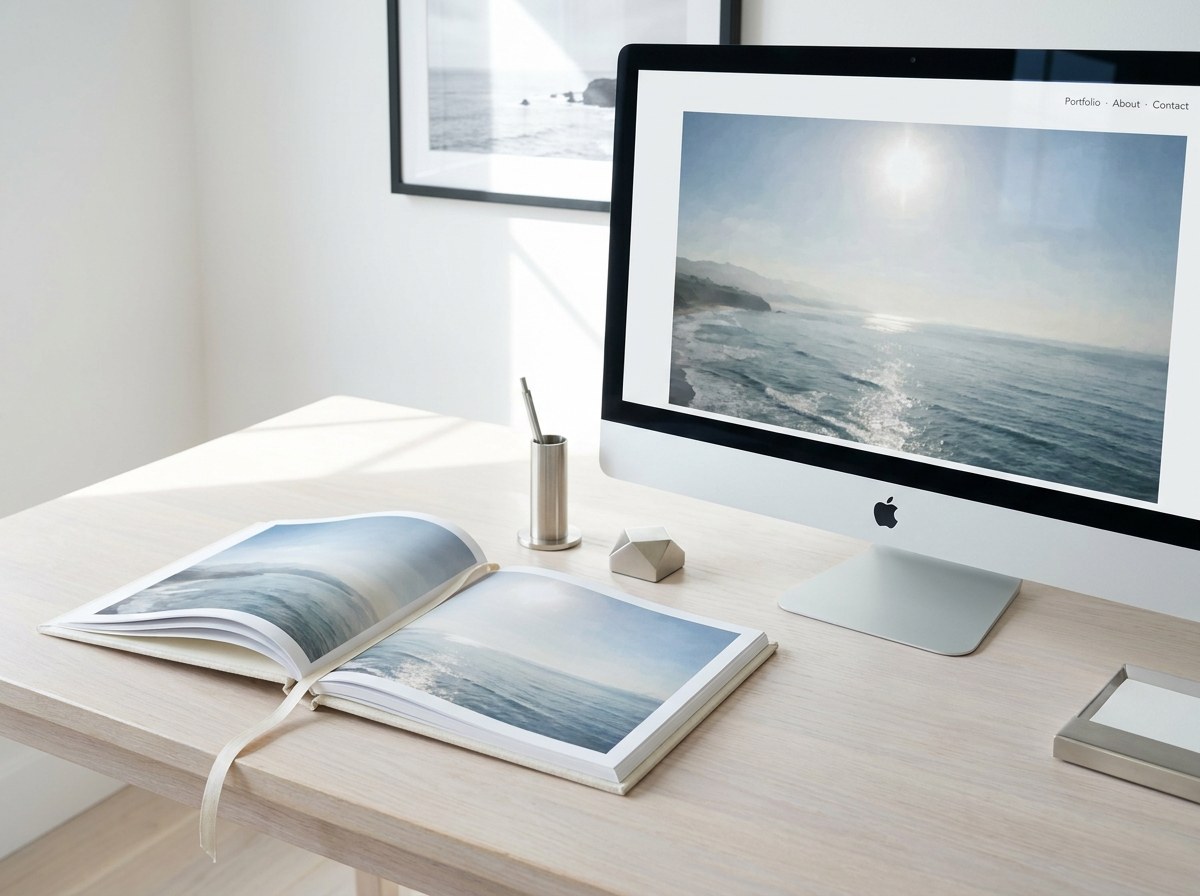
A pale oak desk in bright cool daylight — an open cream-cover photobook with a coastal seascape spread on the left, an iMac on the right displaying the same seascape filling a portfolio site, brushed-nickel desk accessories, framed black-and-white print on the white wall behind.
Act Three · The Place. From hard drive to the room it was waiting for.

Every one of those photographs is going to land somewhere.

The trip on the calendar. The exhibit you have not yet hung. The retreat you have not yet opened. The grandchildren whose photographs are still on the camera card. The friends who keep asking where to see the work.

The only question worth asking is where.

A quiet hour. A quiet truth.

The hour where the work is finally presented properly.

· · · Sixty Minutes · Live

Reserve My Free Seat
Two minutes to know

Is this hour for you?

Built for you if
  • You've put hundreds of hours into your photography— and you can't seem to get any traction for the work.
  • Everyone in your life says you're really good at this— but when you put the work out there, all you hear back is crickets.
  • A part of you has wondered, quietly, whether the work is good enough— even with decades of photographs and a hard drive full of pictures most people will never see. After the hour, you'll know that gate isn't actually about your work. It's about the place.
  • When someone asks where to see your work,the answer gets harder than it should be. Not because the photographs aren't good — but because there is no place worth pointing them to yet.
  • You've tried building a site yourself— Squarespace, Wix, WordPress — and a weekend turned into a month. If you really had time for it, wouldn't it be done already?
  • You'd quietly like the recognition— not for the market, but because the work has earned it.
Not for you if
  • You only share with close family— and you'd never want the work seen any wider.
  • You'd rather build it yourself— and you have the time to do it well.
  • You don't yet have the photographsyou'd want others to see.

If the left column reads like you — this hour is for you.

Your 60-minute hour

Three acts. One quiet truth about photography.

The hour is built like a slow read — what's wrong, what's right, how it gets built. We take our time.

Act One
First 20 minutes

What's working against you as a photographer?

  • Why so many serious photographers stay invisible — even after decades of work
  • Why social media keeps disappointing you — even when you post the best work of your life
  • What most photographers never learn about how the world actually sees their work
Act Two
Middle 20 minutes

Why a photography website is different from any other website.

  • What signals "this person is serious" to a stranger in the first few seconds — and what most photography websites get wrong
  • What you'll be able to see on any photography website after this hour — including your own
  • What changes the moment serious photographs find a website that does them justice
Act Three
Final 20 minutes

You've seen where the work belongs. Now what?

  • Build it yourself — and walk out knowing the do's and don'ts of photography websites better than every photographer you know. You'll know what to build. The how is up to you.
  • Hand it to a small team of photographer-designers — sixteen years working with photographers like you. You send photographs. They do the rest. We'll walk you through how it all works in the hour.
  • Do nothing — and there is nothing wrong with that. That is what most photographers do, even photographers whose work is already serious. We'll tell you plainly what you'll lose by waiting and what changes the moment you decide either way.

You'll leave with your work staged the way it deserves.

Notes from the field

A few photographers, in their own words.

My friends had seen the photos before. But seeing them on the website, they said: "I didn't know you were really good at this."

I can now say I'm a photographer.
TB
Taveia Barnes Member, SlickPic
16 Years

quiet stewards of photographers' work — and the technology that holds it

Proof
I tested Wix, Squarespace, Smugmug, and WordPress. SlickPic is somewhat of a hidden gem — the way it handles and displays photography is second to none.
MB
Mike Brandt Member, SlickPic
I tried SmugMug, I tried Fine Art America, and it just doesn't cut it. I needed to up my game.
TK
Tom K. Member, SlickPic
I liked Smugmug, but I spent months looking on internet forums for code to add features. With SlickPic, I asked for design help — and it's just been easy.
JW
Jeff Wiswell Member, SlickPic
Experience
Instead of me making a bunch of mistakes, this comes out in a way that works for me. These guys know how to do it.
SH
Steve H. Member, SlickPic
What sets SlickPic apart is having a designer work with you to create your website. Their customer service is incredible — very responsive, and they make sure things are exactly the way you want them.
JK
Jack Kosowsky Member, SlickPic
With SlickPic, I feel in control. The clean, modern layout has the effect of making my work legitimate.
JF
Judy Faustine Member, SlickPic
Your seat is open

Sixty minutes. Live. Free.

Reserve My Free Seat
A frame we've named after sixteen years of watching it

What we call the hobbyist trap.

The hobbyist trap is not a doubt you have about yourself. It is a doubt other people project on you — even when the work is already serious.

The right place to present photographs can change that. Not because anything about the work has changed. But because the place tells people, plainly, how to see it. It gives the world permission to see you the way you already see yourself.

I can now say I'm a photographer.
Taveia Barnes · Member, SlickPic

Same hands since 2010.Four of the five engineers who shipped SlickPic in 2010 are still at the keyboard.

Always current.Quietly maintained, kept up to date with the technology built for photography — without you ever needing to think about it.

Your photographs.Never used to train AI. Never harvested. Hosted here, looked after here.

A SlickPic photography monograph in oxblood leather with gold-foil logo, beside a brass loupe and library lamp.
Helping photographers Since 2010
About SlickPic

Sixteen years. One quiet mission.

Same company. Same people. Same mission since 2010. SlickPic has spent sixteen years looking after portfolio websites for serious photographers — including some of the photographers you'd recognize from the conference circuit, the ones who teach everyone else.

Your host, Kevin La Rue, has spent the last quarter-century in photography and the last four years inside SlickPic — which means he's spent more time looking at serious photographers' work than almost anyone you'll meet. The hour you'll spend with him is the same conversation he's had a thousand times, in private, with photographers who feel exactly the way you do.

Every portfolio we build is done by hand, so we can only take on so many at a time before the quality slips — and the quality is the whole point. We open a limited number of build spots each round, and this hour is where we open the next one. If you've been meaning to give the work a place to live, this is a good week to come.

The Right Place for Your Best Photographs

The hour where the work is finally presented properly.

That's it. That's the hour.

A note before you go The photographs you've carried the longest have been waiting the longest for somewhere to live. That isn't a flaw in your work — the work is done. It's the room that was never built. Thursday, we show you what changes the moment the work finally has a place to live.

· · Sixty Minutes · Live on Zoom

A place built to present the work properly — while you make it, and quietly keeps holding it long after.

Reserve My Free Seat

Free to attend. No credit card. The Zoom link arrives the moment you register, and again the morning of.

© 2010 – 2026 SlickPic by IQ Logic Inc — Websites and Tools for Great Photographers.

This hour has two goals.

The first is to teach — so you leave with clarity on what makes a portfolio website work for a photographer like you. Whether you build it yourself, hire someone, or come to us, you'll know what to look for and what to avoid.

The second is to invite. If SlickPic is right for you, we'd be glad to have you as a client. No obligation. No follow-up sales call unless you ask for one.

One note on what we can't promise. A portfolio website does not guarantee any specific outcome — who sees the work, who responds to it, or what happens next is shaped by many things outside our control. What it does is give the work a proper place to live.